


When a driver causes an accident while on the job, the injured victim’s legal options extend beyond the driver alone. Florida law allows injured parties to pursue a claim directly against the driver’s employer in many circumstances, and the financial resources an employer brings to a case are typically far greater than what an individual driver could pay. Whether the crash happened during a delivery, a service call, a commute covered by the company, or a trip explicitly authorized by the employer, understanding when employer liability applies can make a significant difference in what recovery is available to you. Car accident claims involving commercial drivers and company vehicles are governed by legal principles that differ meaningfully from standard two-car collisions, and getting the full picture early protects your rights. Distracted driving by company drivers is a leading cause of these collisions — if you were hurt by a distracted driver who was on the job, employer liability may significantly expand your recovery options.
At Wooten, Kimbrough, Damaso, and Dennis, P.A., our attorneys have over 100 years of combined experience representing Central Florida accident victims in complex liability situations, including those involving employer responsibility. We understand the legal doctrines that extend accountability to employers, and we know how to investigate a case to determine every party that may bear responsibility for your injuries.
The Legal Doctrine That Makes Employers Responsible: Respondeat Superior
The foundational legal principle governing employer liability in car accident cases is respondeat superior, a Latin phrase meaning “let the superior answer.” Under this doctrine, an employer can be held vicariously liable for the negligent acts of an employee when those acts occur within the scope of employment. This is not a new or unusual legal concept. Florida courts have applied respondeat superior in personal injury cases for decades, and it is recognized as a cornerstone of employment law throughout the country.
The key question in any respondeat superior analysis is whether the employee was acting within the scope of their employment at the time of the accident. Courts examine factors including whether the employee was performing a task the employer directed or would reasonably foresee, whether the employee was using a company vehicle or following a company route, whether the accident occurred during work hours and in a work-related context, and whether the employee deviated from their assigned duties at the time of the crash. When these factors support the conclusion that the employee was acting in the employer’s interest, the employer shares responsibility for the harm caused.
When Is an Employee Acting Within the Scope of Employment?
The scope of employment question is not always straightforward. Employers routinely argue that an employee was on a “personal frolic” or a deviation from their duties at the time of an accident. Courts look at the specific circumstances of what the employee was doing and why, not just the time of day or whether they were in a company vehicle.
Activities Typically Within Scope
Activities typically within the scope of employment include making deliveries for the employer, traveling between job sites, transporting company equipment or materials, visiting clients or customers as part of a job function, running employer-directed errands, and any travel the employer specifically authorizes or compensates. If an employer pays mileage for a trip, that trip is almost certainly within the scope of employment. If an employer requires an employee to travel between multiple locations during a workday, accidents during those required trips generally fall within scope.
Activities That May Fall Outside Scope
Activities more likely to fall outside the scope of employment include purely personal errands during a lunch break using a personal vehicle, the commute to and from work in most circumstances (though exceptions exist), travel that significantly deviates from an assigned route for personal reasons, and off-the-clock activities the employer did not authorize. However, even these situations can sometimes support liability depending on the specific circumstances, which is why a thorough investigation is necessary before drawing any conclusions.
The Dangerous Instrumentality Doctrine in Florida
Florida provides an additional basis for employer liability that goes beyond respondeat superior. The dangerous instrumentality doctrine holds that the owner of a vehicle is responsible for damages caused by anyone who operates that vehicle with the owner’s consent, permission, or knowledge. Unlike respondeat superior, the dangerous instrumentality doctrine does not require the driver to be acting within the scope of employment. It requires only that the owner gave the driver permission to use the vehicle.
This doctrine has significant practical importance in employer liability cases. If a company owns or leases a vehicle and an employee uses that vehicle to cause an accident, the company may be liable under the dangerous instrumentality doctrine regardless of whether the employee was on company time or performing a work-related task. Florida courts have recognized the dangerous instrumentality doctrine since the early twentieth century, and it remains a powerful tool for holding vehicle owners accountable for the conduct of those they allow to drive their property.
Florida’s Comparative Fault Framework and Employer Claims
When multiple parties share responsibility for an accident, Florida’s comparative fault statute governs how liability is apportioned. Under Florida Statutes §768.81, fault is allocated among all parties found responsible, and damages are reduced in proportion to each party’s percentage of fault. An injured person can recover damages as long as they are not found more than 50 percent at fault for their own injuries. If both the employer and the individual driver are defendants, the jury allocates fault percentages among all responsible parties, and the total recovery reflects the combined liability of all defendants.
In practical terms, naming an employer as a defendant often means access to substantially greater insurance coverage than is available through the employee driver’s personal auto policy. Commercial auto insurance policies typically carry much higher liability limits, and large employers may carry umbrella or excess coverage on top of their primary policy. Building the strongest possible case for employer liability is often what makes the difference between a recovery that covers your losses and one that falls significantly short.
Negligent Hiring, Retention, and Entrustment
Beyond respondeat superior and the dangerous instrumentality doctrine, injured parties in Florida may pursue claims against an employer on additional theories of direct negligence. These theories address situations where the employer’s own conduct, separate from the employee’s, contributed to the harm.
Negligent hiring claims arise when an employer fails to conduct adequate background checks or screening before placing an employee in a role that involves driving. If an employer hires a driver with a history of DUI convictions, license suspensions, or serious at-fault accidents without investigating that history, and the driver causes another accident, the employer may face direct liability for that failure to screen. Negligent retention claims address situations where an employer knows or should know that a driver has become unsafe, but continues to employ them in a driving capacity. Negligent entrustment applies when an employer provides a vehicle to a driver they know or should know is incompetent, impaired, or otherwise unfit to drive safely.
These theories are distinct from respondeat superior. Negligent hiring, retention, and entrustment claims focus on the employer’s own knowledge and decision-making, not just on whether the employee was within the scope of employment. They can be especially important in cases where scope of employment is disputed, because they may provide an independent path to employer liability.
Gathering Evidence to Establish Employer Liability
Building a successful employer liability case requires a thorough investigation into both the driver’s conduct at the time of the accident and the employer’s relationship with that driver. The following categories of evidence are typically relevant to these claims.
- Employment records. Hire date, job title, assigned duties, and whether driving was a required component of the role establish the employment relationship and the scope of the driver’s responsibilities.
- Vehicle records. Fleet ownership documentation, vehicle assignment logs, and maintenance records establish whether the employer owned or controlled the vehicle involved in the crash.
- Driver history. The employer’s pre-employment screening records, any internal incident reports involving the driver, and the driver’s motor vehicle record can support negligent hiring or retention claims.
- Cell phone and GPS data. Records of calls, texts, or GPS positions at the time of the accident can establish whether the driver was engaged in work-related activity and whether distraction contributed to the crash.
- Internal communications. Emails, routing assignments, delivery logs, or dispatch records can confirm the driver was on a work-related task at the time of the collision.
Because employers may move quickly to limit access to these records, retaining an attorney promptly and sending a formal litigation hold notice to the employer is an important early step in protecting your ability to build this evidence base.
Independent Contractors and Employer Liability
Employers sometimes attempt to shield themselves from liability by classifying drivers as independent contractors rather than employees. In Florida, this classification does not automatically insulate an employer from liability, particularly when the reality of the working relationship looks more like employment than true independent contracting. Courts look at factors including how much control the company exercises over when, where, and how the driver works, whether the company provides the vehicle or pays for fuel and maintenance, whether the driver works exclusively for one company, and whether the driver performs work that is integral to the company’s core business.
In recent years, litigation involving rideshare companies and delivery platforms has produced significant legal developments on this question. Even when a company successfully classifies workers as independent contractors, it may still face liability through the dangerous instrumentality doctrine if it owns the vehicle, or through direct negligence theories if it failed to vet drivers adequately.
Frequently Asked Questions About Employer Liability in Florida Car Accidents
Can I sue an employer if their employee hit me while driving a company car?
Yes. In Florida, two legal theories often allow injured victims to pursue a claim directly against the employer. The first is respondeat superior, which holds an employer liable for an employee’s negligent acts during the course of their employment. The second is Florida’s dangerous instrumentality doctrine, which holds vehicle owners liable for damages caused by any driver they permitted to use the vehicle, regardless of whether that driver was performing work duties. If the driver was in a company car with the employer’s permission, the employer may face liability under one or both of these theories.
What if the employee was running a personal errand at the time of the accident?
Whether a personal errand removes the driver from the scope of employment depends heavily on the specific facts. A brief detour for personal reasons during an otherwise work-related trip may not break the chain of employer liability, while a significant departure from work duties for purely personal reasons may reduce or eliminate it. Florida’s dangerous instrumentality doctrine can still apply even during personal errands if the employer owns the vehicle and gave the driver permission to use it. An attorney can evaluate the specific circumstances of the accident and advise on which legal theories apply.
Does it matter if the company vehicle was a fleet truck or the employee’s personal car?
It matters for some legal theories but not all. Florida’s dangerous instrumentality doctrine applies only to the vehicle’s owner, so it is most directly relevant when the employer owns or leases the vehicle. Respondeat superior, by contrast, can apply whether the vehicle is company-owned or personally owned, as long as the driver was acting within the scope of employment at the time of the accident. Negligent hiring, retention, and entrustment claims may also apply regardless of vehicle ownership. The specific vehicle involved helps determine which legal theories are strongest, but it does not necessarily preclude employer liability.
What if the driver was classified as an independent contractor instead of an employee?
Independent contractor classification does not automatically eliminate employer liability. Florida courts look at the reality of the working relationship, not just the label the company applies. If the company exercised significant control over the driver’s schedule, routes, equipment, and methods, courts may find an employment relationship exists regardless of what the contract says. Additionally, the dangerous instrumentality doctrine can apply to independent contractors if the company owns the vehicle they were driving. Cases involving delivery drivers, rideshare drivers, and other contractor classifications often require a careful factual analysis to determine what legal theories are available.
How does Florida’s comparative fault law affect a claim involving an employer?
Under Florida Statutes §768.81, fault is allocated as a percentage among all parties found responsible for an accident. In a case involving an employee driver and their employer, both may be named as defendants, and the jury assigns a percentage of fault to each. The employer and employee share combined liability up to their total percentage. You can recover damages as long as you are not found more than 50 percent at fault for your own injuries. Having an employer as a defendant alongside the individual driver often means access to significantly higher insurance coverage, which can be critical when injuries are serious.
Injured by a Company Driver? Our Central Florida Legal Team Is Ready
Cases involving employer liability require more than evaluating a single driver’s insurance coverage. They require a comprehensive investigation into the employment relationship, vehicle ownership, driver history, and the specific circumstances of the crash at the time it happened. At Wooten, Kimbrough, Damaso, and Dennis, P.A., founding attorneys Butch Wooten, Orman Kimbrough, Mike Damaso, and Tom Dennis have spent over 60 years building and litigating cases against employers, insurers, and corporations across Central Florida. We take on the investigative work that these cases require, from reviewing employment records to issuing litigation hold notices before evidence can disappear. You can also learn about the full range of practice areas our firm handles or read more about car accident claims in Central Florida.
If a company driver’s negligence caused your injuries, do not assume the individual driver’s coverage is all that is available to you. To schedule a free consultation and let our team evaluate your employer liability claim, use our contact form online.
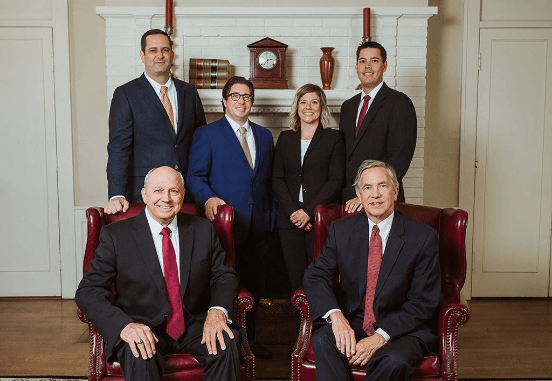
Legally Written and Reviewed by a Managing Partner
Wooten, Kimbrough, Damaso, and Dennis, P.A.
Our content is written and reviewed by our founding attorneys Butch Wooten, Orman Kimbrough, Mike Damaso, and Tom Dennis. Helping the injured since 1966, they’ve successfully handled thousands of personal injury cases across Florida. Whether you’re a Florida resident or an out-of-state visitor injured in Florida, we’re dedicated to providing clear and reliable information to help you navigate your legal options confidently.