


Many Florida drivers are familiar with car accidents between two or more drivers where one behaved recklessly or negligently and caused a crash. While determining liability can still be challenging after a standard car accident, it can be even more so in a crash involving a broken-down car. Depending on the circumstances surrounding the accident, either the driver of the moving vehicle or the owner of the broken-down car may be at fault — and in some cases, both parties may share responsibility.
If you have been injured in an accident with a broken-down vehicle in Florida, an experienced car accident attorney can evaluate the facts of your case and help you pursue the compensation you deserve.
Who Can Be Held Liable in an Accident with a Broken-Down Car?
In an accident involving a broken-down car, the driver or owner of the inoperable vehicle may be held liable depending on the steps each individual took — or failed to take — to prevent a crash. When a car breaks down on the road, the owner has a legal obligation to move the vehicle off the traveled portion of the roadway and onto the shoulder whenever it is safe to do so. If the owner cannot safely move their car to the shoulder, they must immediately activate their hazard lights and use warning triangles, flares, or other devices to alert approaching drivers of the disabled vehicle.
Under Florida Statute § 316.2398, a vehicle that has broken down and cannot be safely removed from the roadway must display lighted flares, warning reflectors, or similar warning devices placed at an appropriate distance from the vehicle to warn oncoming traffic. Failure to take these precautions can expose the broken-down vehicle’s owner or driver to liability for any subsequent accidents that result from other motorists being unable to see or respond in time to the disabled vehicle.
At the same time, the driver of the moving vehicle may also bear liability if they failed to notice the disabled vehicle, were driving while distracted or impaired, were traveling at a speed that prevented them from stopping in time, or ignored clearly visible warning signals already deployed. These accidents often involve questions of shared fault, which is why a thorough investigation is essential.
Shared Liability and Florida’s Comparative Fault Rule
Florida operates under a modified comparative fault system, which means that if more than one party is found responsible for a crash, each party’s potential recovery is adjusted according to their assigned percentage of fault. For example, if the broken-down vehicle’s owner failed to activate hazard lights and the driver of the moving vehicle was also found to have been speeding, each party may bear a proportionate share of the liability.
Under Florida’s current comparative fault law, if you are found to be more than 50% responsible for an accident, you may be barred from recovering any damages. This is why working with an attorney to establish the full liability picture — and to counter any effort to shift disproportionate blame onto you — is critical to preserving your right to compensation. Evidence such as traffic camera footage, skid marks, accident reconstruction analysis, vehicle data, and witness statements all play an important role in sorting out comparative fault in these complex scenarios. For a broader overview of how fault is determined in Florida collisions, see our car accident resources.
Understanding Florida’s Move Over Law
If police officers, emergency personnel, tow truck operators, or other service vehicles have responded to a broken-down vehicle and are stopped on the road or shoulder with active warning lights, Florida’s Move Over Law requires all approaching drivers to move one lane away from the emergency or service vehicle whenever it is safe to do so. If traffic conditions or a two-lane road make it impossible to move over safely, drivers must slow to 20 miles per hour below the posted speed limit, or to 20 miles per hour if the posted limit is 20 miles per hour or less.
Florida has expanded the Move Over Law over the years to cover not just emergency responders but also tow trucks, utility vehicles, and other roadside service vehicles displaying active warning lights. Drivers who fail to comply with the Move Over Law and strike a broken-down vehicle or a responder at the scene may be found at fault for the resulting accident. If you are unsure whether the Move Over Law applied in your specific situation, a Florida car accident attorney can clarify your rights and obligations under the current statute.
What to Do If You Are Injured in a Crash Involving a Broken-Down Vehicle
If you are injured in an accident involving a disabled or broken-down vehicle, taking the right steps immediately can protect both your health and your legal rights. Seek medical attention promptly, even if your injuries seem minor at first. Many serious injuries — including soft tissue damage, concussions, and traumatic brain injuries — may not produce obvious symptoms until hours or days after the crash.
At the scene, document the condition of the broken-down vehicle, including whether hazard lights were activated, whether warning devices such as reflectors or flares were deployed, and where the vehicle was positioned on the road. Photograph any skid marks, road signage, and the surrounding area. Obtain contact information from any witnesses. File a police report and request a copy for your records. Avoid making any statements to the other driver’s insurance company without first consulting with an attorney, as early statements can be used to minimize or deny your claim.
You may also want to review Florida’s statutes on disabled vehicle obligations and Move Over Law requirements, as violations of these laws can serve as important evidence of negligence in your case. An attorney can help you identify and document these violations as part of building your claim. For additional guidance on what to do when fault is disputed after a Florida accident, visit our related resources.
Contact an Experienced Car Accident Attorney at Wooten, Kimbrough, Damaso, and Dennis, P.A.
If you were injured in an accident with a broken-down vehicle, the skilled attorneys at Wooten, Kimbrough, Damaso, and Dennis, P.A. may be able to help you establish liability and hold the negligent party accountable for the losses you have suffered. Our attorneys provide a personalized approach to every case to help address each of our clients’ unique needs. When you choose us, you can have confidence that experienced advocates are working to secure the full compensation you are entitled to receive. Contact us today to schedule a free consultation.
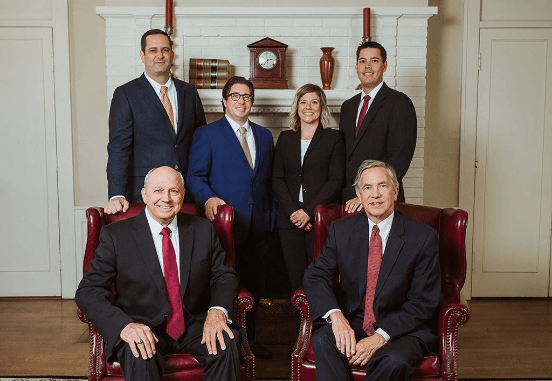
Legally Written and Reviewed by a Managing Partner
Wooten, Kimbrough, Damaso, and Dennis, P.A.
Our content is written and reviewed by our founding attorneys Butch Wooten, Orman Kimbrough, Mike Damaso, and Tom Dennis. Helping the injured since 1966, they’ve successfully handled thousands of personal injury cases across Florida. Whether you’re a Florida resident or an out-of-state visitor injured in Florida, we’re dedicated to providing clear and reliable information to help you navigate your legal options confidently.