


In a car accident, surveillance footage can mean the difference between a disputed version of events and a clear visual record of exactly what happened. Cameras mounted on traffic signals, nearby businesses, parking lots, and even residential doorbells may have captured your crash. The question is whether you can get that footage and how quickly you need to move.
The answer is yes, you generally can request surveillance footage, but the window to act is narrow. Video recordings are frequently overwritten automatically within days or even hours, and once that footage is gone, there is no recovering it. If you were seriously hurt in a Florida crash, your first step is to get medical attention. After that, speaking with a Florida car accident attorney as soon as possible can help preserve the evidence that may be essential to your case.
What Types of Cameras May Have Captured Your Crash
Depending on where your accident happened, several types of cameras may have recorded the incident. Traffic signal cameras operated by local governments or the Florida Department of Transportation, private business security cameras facing the roadway or parking lot, dashcams in other vehicles present at the scene, residential doorbell cameras near the crash location, and ATM or bank cameras positioned toward nearby roads are all potential sources.
Each of these has different rules for access and different timelines before footage is deleted. Acting quickly to identify and request all relevant recordings is one of the most important things you can do for your claim. Our guide on preserving evidence after a personal injury claim walks through additional steps to protect your case from the moment a crash occurs.
Why Acting Fast Matters
Most private security systems record over old footage automatically, and the storage window can be as short as a day or two depending on the system. Government-operated traffic cameras may follow their own retention schedules, and some agencies do not archive footage at all unless a specific request is made before it cycles out. This means the single biggest factor in whether footage survives long enough to help your case is how quickly someone identifies it and asks that it be preserved.
If you are physically able to do so at the scene, take note of any cameras you see on nearby buildings, traffic signals, or parking lot poles, along with the approximate time of the crash. That information can make all the difference when your attorney follows up in the hours or days afterward.
How to Request Footage in Florida
For government-operated cameras, Florida’s Public Records Law under Chapter 119 of the Florida Statutes gives the public the right to access public records, which may include traffic camera footage held by a government agency. You can submit a written public records request to the relevant city, county, or state transportation authority to obtain that footage.
For private cameras, the process is less formal but no less urgent. You or your attorney can contact the property owner directly and request that the footage be preserved and shared. Once a lawyer is involved, they can also send a preservation letter, which formally puts the business or individual on notice that the footage may be needed as evidence and should not be destroyed.
What If You Can’t Get the Footage You Need?
Not every camera near your accident will actually help your case, and some traffic cameras are designed only for real-time monitoring rather than recording. If the primary camera you were counting on does not have usable footage, other sources are often still available. Dashcam footage from your own vehicle or another driver present at the scene, footage from a nearby business that was not the first one contacted, and doorbell camera footage from a home along the route can all fill in gaps that a single missing recording leaves behind.
An attorney who regularly handles these requests knows which agencies typically record versus monitor only, and can move quickly to whichever source is most likely to still have usable footage before it disappears.
Using Footage to Build Your Case
Surveillance footage does not prove liability on its own, but it can corroborate your account of the crash, contradict a false version of events, and reveal traffic violations, distracted driving, or other negligence by the other driver. Combined with a police report, witness statements, and physical evidence, it can substantially strengthen your case. For more on establishing fault, our FAQ on proving fault in a Florida auto accident is a helpful resource.
Filing a timely police report also creates the official record that often supports your footage request. If you have not yet done so, our guide on filing a police report after a Florida car accident explains the process step by step. Our Orlando car accident attorneys routinely pursue surveillance footage on behalf of injured clients and understand how to use it strategically in negotiations and at trial.
Insurance adjusters are trained to look for ways to shift blame after a crash, and clear footage removes much of the room they have to dispute what happened. A recording that shows the other driver ran a light, drifted out of a lane, or failed to yield can turn a contested claim into a straightforward one, which is often the difference between a fair settlement and a prolonged dispute. Even footage that only partially captures the crash can still corroborate other evidence and make your account more difficult to challenge.
Wooten, Kimbrough, Damaso, and Dennis, P.A. Can Help You Act Quickly
If you were hurt in a crash in Florida and believe surveillance footage may exist, you need legal help right away. Attorney Michael Damaso and the trial lawyers at Wooten, Kimbrough, Damaso, and Dennis, P.A. have been helping injured Floridians recover for more than 60 years, and our firm holds the highest ranking for Orlando injury lawyers in the Best Law Firms report by U.S. News and World Report. Our partners are board certified by the Florida Bar in civil trial litigation.
Do not wait and risk losing critical evidence. Contact us through our online form to speak with our team at no cost.
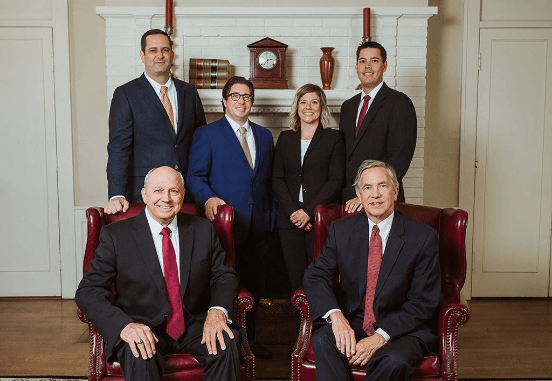
Legally Written and Reviewed by a Managing Partner
Wooten, Kimbrough, Damaso, and Dennis, P.A.
Our content is written and reviewed by our founding attorneys Butch Wooten, Orman Kimbrough, Mike Damaso, and Tom Dennis. Helping the injured since 1966, they’ve successfully handled thousands of personal injury cases across Florida. Whether you’re a Florida resident or an out-of-state visitor injured in Florida, we’re dedicated to providing clear and reliable information to help you navigate your legal options confidently.